
There’s a particular kind of heartbreak that comes with washing your car on a Sunday morning, stepping back to admire your work, and noticing a spiderweb of fine scratches glinting in the sunlight. You didn’t mean to damage your paint. You were trying to take care of it. But somewhere between the bucket and the drying cloth, something went wrong.
You’re not alone. Most Indian car owners unknowingly damage their vehicles’ paint every single weekend—not through neglect, but through well-intentioned routines that quietly strip away gloss, protection, and resale value. The good news? Once you understand what’s actually happening to your paint, fixing it is simpler than you think.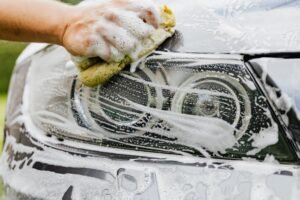
Why Indian Conditions Are Uniquely Brutal on Car Paint
Before we get into the mistakes, it helps to understand what your car is up against. India’s driving environment—intense heat, dust, hard water, monsoon humidity, and stop-start traffic—puts more stress on paint and protective layers than almost any other market in the world. Dust settles on every surface within hours of washing. Hard water leaves mineral deposits that etch into clear coat if left to dry. Bird droppings and tree sap contain acids that can permanently stain paint in a matter of hours, not days.
This means that the margin for error is smaller here than it is in milder climates. A washing technique that might be fine in a temperate country can cause visible damage in Indian conditions within months. The stakes are higher, and the details matter more.
Mistake #1: Washing in Direct Sunlight
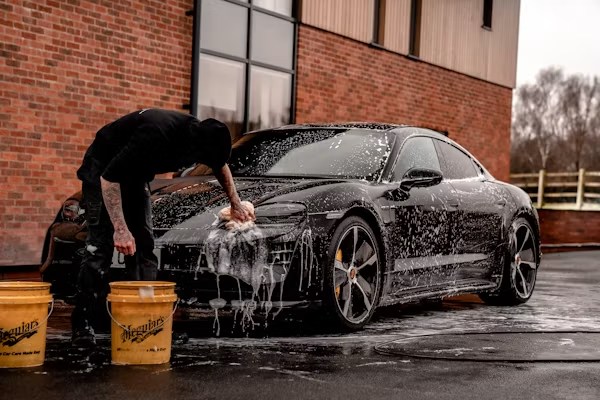
It’s the most common mistake, and it’s the easiest to fix. When you wash your car in direct sunlight, the metal panels get hot. Soapy water dries before you can rinse it, leaving behind concentrated mineral deposits and chemical spots that bond to the paint surface. These spots don’t wash off with the next rain—they etch into the clear coat and require polishing to remove.
The fix: Always wash your car in the shade, ideally early morning or late evening. Work panel by panel rather than soaping up the entire car at once. If you must wash in the sun, keep the surface wet continuously and dry each section immediately after rinsing.
Mistake #2: Using the Wrong Tools
Old cotton T-shirts, kitchen sponges, and cheap cloths are paint’s worst enemies. They trap grit and drag it across the surface like sandpaper, creating the swirl marks that make dark-coloured cars look tired within months. A single ₹150 sponge and an old rag can put enough light marring into a black car to require professional paint correction.
The fix: Invest in a proper microfiber wash mitt and a set of premium microfiber drying towels. Microfiber lifts dirt away from the surface rather than dragging it across. A plush wash mitt releases trapped grit easily when rinsed, and a large twisted-loop drying towel absorbs water without scratching. These aren’t luxuries—they’re the difference between maintaining your paint and slowly destroying it.
Mistake #3: The One-Bucket Wash
Here’s what happens with a single bucket: you dip your mitt into soapy water, wash a dirty panel, and dip the mitt back into the same bucket. Now your wash water is full of grit. Every subsequent dip reintroduces that grit to the paint. It’s a cycle of contamination that repeats itself panel after panel.
The fix: Use the Two-Bucket Method. One bucket holds clean soapy water. The second holds plain rinse water. After washing a panel, rinse your mitt thoroughly in the rinse bucket before reloading it with soap. This simple change dramatically reduces the amount of grit that reaches your paint during a wash.
Mistake #4: Using Dish Soap or Household Cleaners
Dish soap is designed to cut through grease on plates. It does exactly the same thing to the wax and sealant layers protecting your car’s paint. A single wash with dish soap can strip away weeks of protection, leaving your clear coat exposed to UV rays, pollution, and water spots.
The fix: Use a pH-neutral car shampoo formulated specifically for automotive paint. A quality shampoo cleans effectively while preserving your wax or sealant layer, which means your protection lasts longer and your car stays glossy between washes.
Mistake #5: Letting Your Car Air-Dry
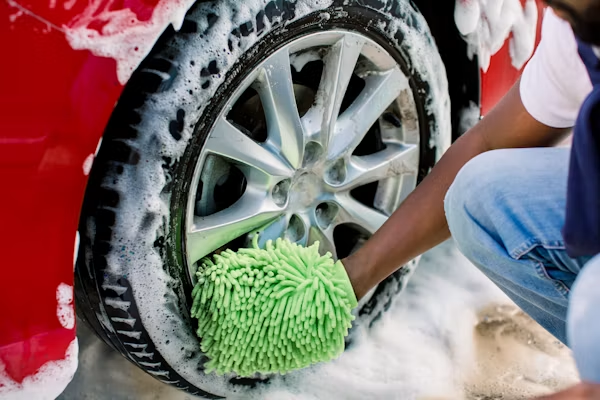
Driving your car to “let the wind dry it” doesn’t work. Airflow never reaches every crevice, and the water that remains evaporates slowly, leaving behind concentrated mineral deposits. In hard-water areas, these deposits etch into paint and protective layers over time.
The fix: Always dry your car manually with a clean microfiber drying towel. Pat the surface rather than dragging, and wring out the towel as needed. Pay attention to door jambs, mirror housings, and panel gaps where water collects and causes rust over time.
Mistake #6: Skipping Protection
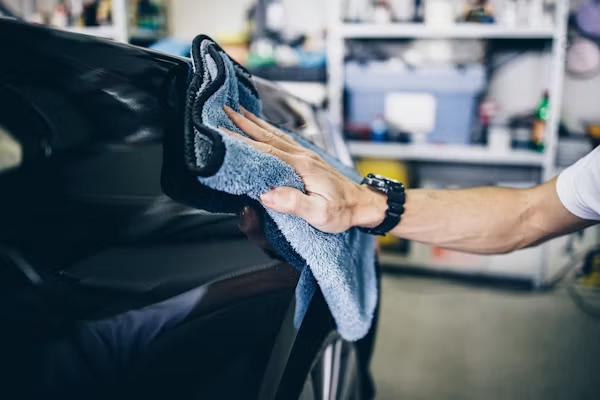
Washing your car without applying protection is like showering without moisturising—you’re clean, but you’re vulnerable. Without a wax, sealant, or coating layer, your clear coat takes the full brunt of UV radiation, bird droppings, tree sap, and industrial fallout.
The fix: Apply a quality carnauba wax or synthetic sealant after every wash, or invest in a ceramic coating for longer-lasting protection. A wax layer does three things: it enhances gloss, it repels water and contaminants, and it makes future washes easier because dirt doesn’t bond as tightly to the surface.
Mistake #7: Ignoring the Interior
Paint gets all the attention, but the interior is where you actually spend your time. Dusty dashboards, stained seats, and faded plastic trim don’t just look bad—they degrade faster without protection. UV rays crack dashboards, leather dries out and splits, and fabric upholstery stains permanently if spills aren’t treated promptly.
The fix: Use dedicated interior care products—dashboard protectants for plastic and vinyl, leather conditioners for seats, and fabric cleaners for upholstery. A quick wipe-down every week prevents the slow accumulation of dust and grime that makes deep cleaning necessary.
Building a Routine That Actually Works
You don’t need a studio full of machines to get professional-looking results at home. You need the right basics used in the right order. A smart kit prevents damage before polishing is ever needed, and it lets you work in layers: wash, decontaminate, protect, maintain.
Here’s what a sustainable weekly routine looks like: a two-bucket wash with pH-neutral shampoo takes 25 to 35 minutes. Drying with a proper microfiber towel takes another five. Applying a spray wax or quick detailer adds maybe three minutes. That’s under 45 minutes a week to keep your car looking showroom-fresh and protected against everything India’s roads throw at it.
At Glossora, we believe that proper car care isn’t a chore—it’s an investment in something you use every single day. The right products don’t just make your car look better. They protect your paint, preserve your interior, and keep your vehicle’s value intact for years to come. Because a car that’s cared for isn’t just a car that shines. It’s a car that lasts.
Browse our range of car care products at glossora.in and start building a routine that works for your car and your life.